
…or should I say vibe coding?
The name “low code” has a bit of a sentiment and legacy attached to it. That’s why the term “Vibe Coding” was coined recently by Andrej Karpathy to describe the new wave of AI-assisted software development. You describe the prompt, the LLM generates the code.
In this blog post, I’ll explain why vibe coding is slowly becoming the new low code.
Isn’t every program made of code?
In the early days of computers, applications could only be built by writing code from scratch. This required real, skilled developers. The earliest programming languages like Fortran and COBOL, were complex and verbose; programmers had to manage memory manually and deal with abstract syntax.
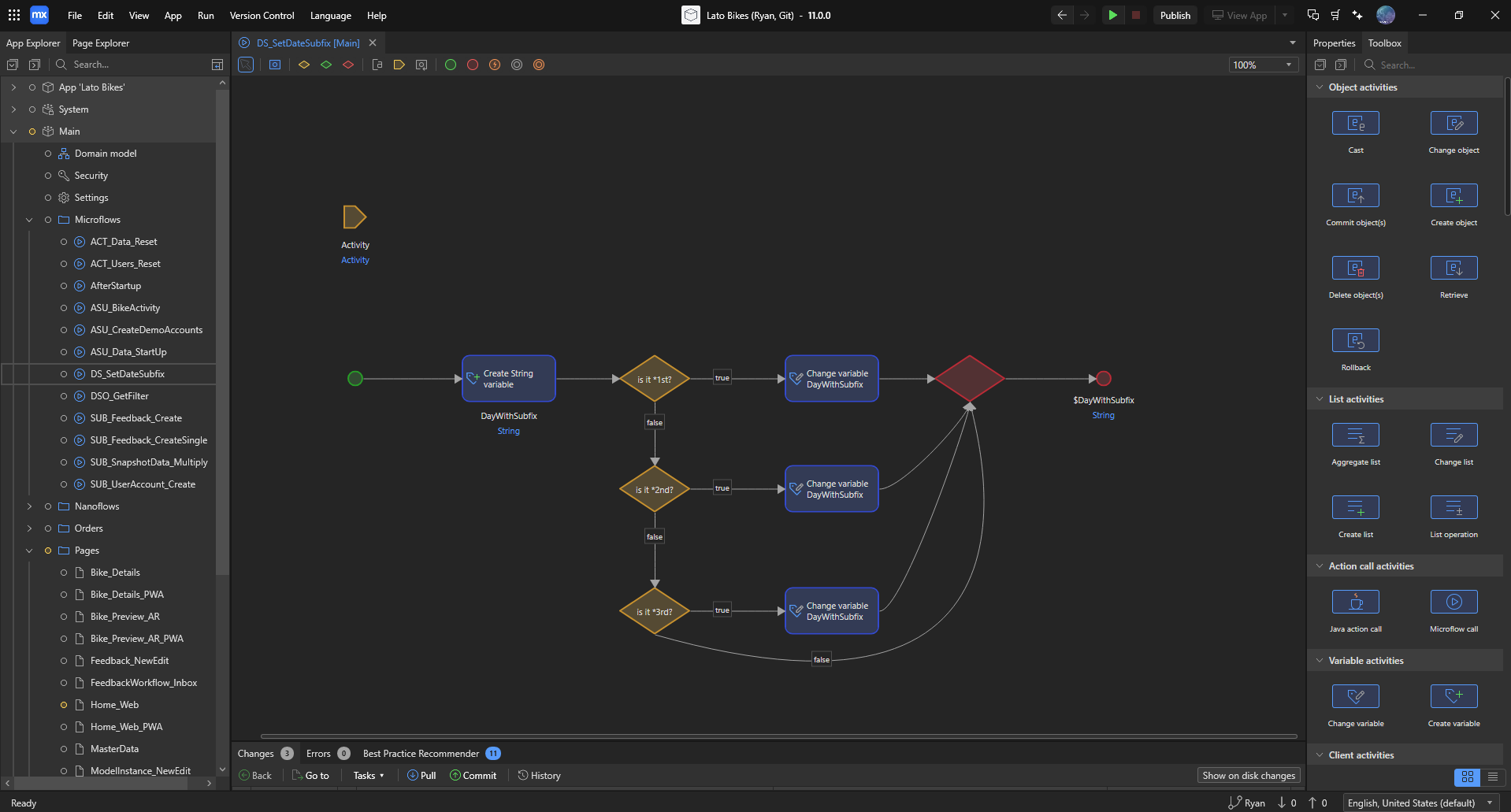
Over the years, the industry put effort in making custom software solutions easier to build without requiring hiring scarce and expensive software developers. This is where low code platforms came in. Low code platforms provide visual interfaces, drag-and-drop components, and pre-built templates that allow users to create applications with minimal coding. Examples of low code platforms include Microsoft Power Apps, OutSystems, and Mendix. These platforms have been around for a while and were often met with mixed reactions, especially from professional coders.
The new low code, with AI
LLMs are good at predicting text, based on the provided input (prompt & context). And code after all is just highly structured text. This has resulted in a wave of AI-powered coding assistants, IDEs and other tools that generate code. Building an app just by typing your intentions in natural language? Sounds like low code to me.
The better these models get at generating software, the more they can abstract away the code itself. GitHub Copilot used to be just a code completion tool, but now with agent-mode it can browse entire codebases, understand errors and implement complex requirements in a new or existing codebase. These advancements further enable the “prompt-based” low code approach, where users can describe what they want in natural language and get working software in return.
I clearly see a trend in the way the tools look and feel. Less focus on code, more focus on prompting and output. Most recent tools now have two main modes: the prompt & agent mode (code is more hidden) and the IDE mode (code is visible and editable).
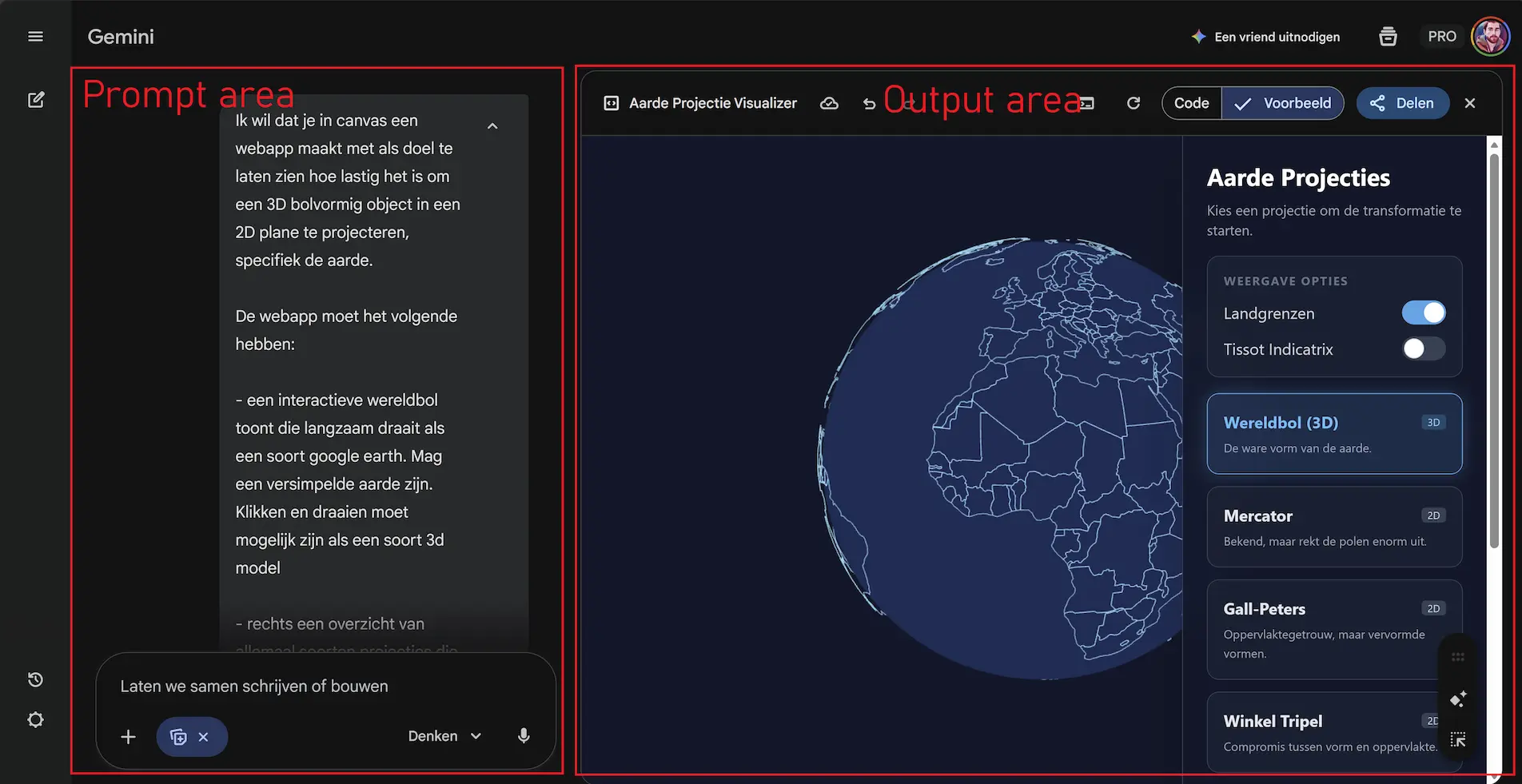
Example of recent low-code AI coding tools:
- Cursor 2.0: provides a new agent-mode interface, hiding the code
- Google Antigravity: yet another VS Code fork specifically for Google’s AI coding agents
- OpenAI Codex: AI coding tool by OpenAI
A Globe in Gemini 3
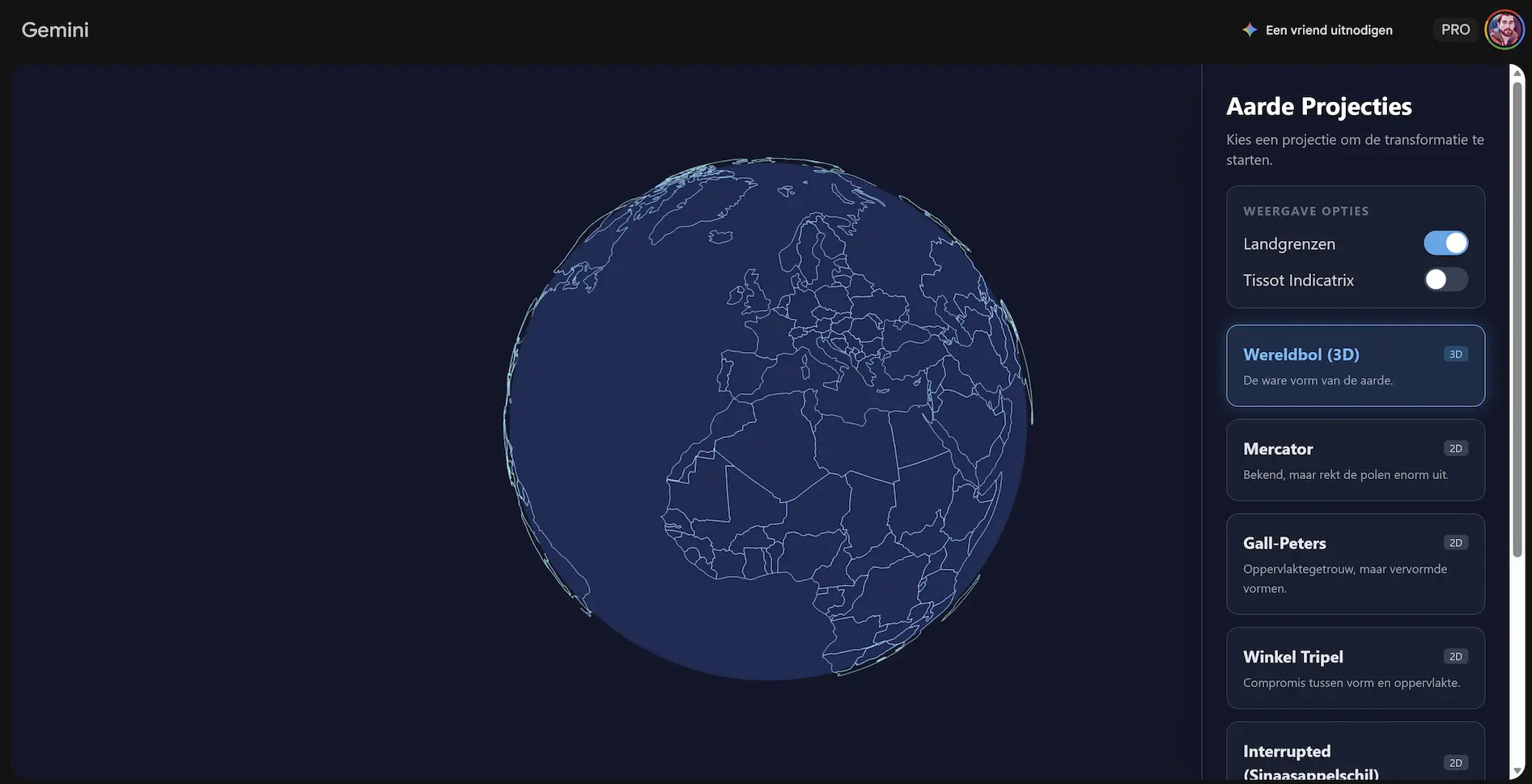
Last week I tested Gemini 3 Pro, Google’s latest large language model, asking it to create a small but complex web-app. Gemini generated the web application in minutes, showing the result in the web interface. The website shows a 3D map of the world and lets you pick different 2D projections. The map then animates from the 3D globe to the selected projection.
The code it generated was complex, but worked on the first try. The website also looked really good. With some extra prompts to refine the functionality a bit, I had a working web application in less than 10 minutes. Very often in previous tools, follow-up questions ended up breaking the already working code. In this case it really felt like a collaborative process, where I didn’t have to look at the code at all. Low code indeed.
The future: throw-away apps
We are heading towards a future where it becomes so easy to generate a simple application with AI, that for many use cases throw-away apps will be generated. You need a visualisation of the sales data for your team? You need to pitch your idea to a client? Just prompt the AI to generate a simple web app for you. Throw it in the bin after use.
This will be accessible to everyone, not just developers, although they will be the ones that can probably get the most out of these tools.
The hidden costs: a skeptic perspective
Although I was blown away by the capabilities of Gemini 3 Pro, I remain skeptical about the long-term implications of this inevitable shift of generating code. Let me sum up some of my concerns:
1. Quality
AI looks magical sometimes, but we must not forget that hallucinations are still a big issue in current LLMs. Code can appear to be working, but without closer look and proper testing, bugs and security issues can easily slip through.
2. Maintainability - mental model
When people write software in big, complex projects, they build a mental model of the system. This helps them to understand intricate details, potential pitfalls and edge cases. It helps them to review code added by others. The more code is being generated by AI, the less people will understand the system as a whole. This could lead to hidden bugs, review errors and faulty implementation of requirements.
3. Maintainability - ownership
The best code is written when developers feel ownership of the product. When issues occur (which they will), they will be motivated to fix them, and try to prevent them in the future. For me, this sense of ownership brings pride and satisfaction. If code is generated by AI, this sense of ownership could fade away, leading to lower quality code and less motivation to improve the product.
4. Joy
Programming is fun. Puzzling through hard problems, often with others, is what makes the job of software developer for me the most fulfilling job in the world. The more we become instructors of AI, the less joy I would feel in my work.
5. Lack of technical skills
Learning to code and everything that comes with it (command line, version control, testing strategies, security best practices, just to name a few) teaches you a lot of valuable skills that are transferable to many other domains. It helps us developers to understand how computers work. Relying more on AI to do the hard work for us could lead to a degradation of these skills over time. This means AI becomes both a single point of failure, and a security risk if we cannot properly assess the code it generates anymore.
Conclusion
Low code is back, but different. It’s inevitable big tech companies keep advancing their AI tools. Vibe coding will become the new normal, and developers will need to adapt to this new way of working.
I will keep a critical eye on the drawbacks, and advise you to shape your own thoughts and solutions to these challenges. Are you ready to give up ownership of your code, or is the risk too high?